Types of Solar Panels
Each type of solar panel has its unique characteristics, advantages, and disadvantages. Understanding the different types of solar panels can help you make an informed decision when choosing a solar panels for your system at home or business.
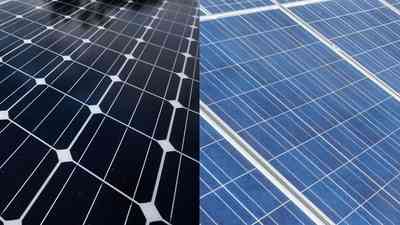
We have seen in previous topic that solar panels are the key component of solar energy systems, different parameters mentioned in datasheet of solar panel and list several types of solar panels available in the market today.
Each type of solar panel has its unique characteristics, advantages, and disadvantages. Understanding the different types of solar panels can help you make an informed decision when choosing a solar panels for your system at home or business. In this section, we will explore the most common types of solar panels.
Poly Crystalline Solar Panels
Polycrystalline solar panels, also known as multi-crystalline solar panels, are a type of photovoltaic (PV) panel that are made from multiple small crystals of silicon. They are one of the most common types of solar panels used in residential and commercial solar energy systems.
Polycrystalline solar panels are made by connecting number of poly-crystalline solar cells together.
Compared to monocrystalline solar panels, polycrystalline solar panels have slightly lower efficiency, typically in the range of 15-18%. However, they are also less expensive to produce and have a lower temperature coefficient, meaning they perform better in hot weather.
Polycrystalline solar panels have a longer lifespan and better tolerance to high temperature compare to thin film solar panels. They are also more suitable for large-scale solar power projects.
Mono Crystalline Solar Panels
Monocrystalline solar panels, also known as single-crystalline solar panels, are a type of photovoltaic (PV) panel that are made by connecting number of mono-crystalline solar cells together. They are one of the most popular types of solar panels used in residential and commercial solar energy systems due to their high efficiency, typically in the range of 18-22%.
Monocrystalline solar panels are more efficient than polycrystalline solar panels, meaning they can generate more electricity from the same amount of sunlight, but they are also more expensive to produce. They have a longer lifespan than polycrystalline solar panels. They are a good option for smaller solar energy systems, or for systems that need to generate a lot of power in a small area.
When considering monocrystalline solar panels, it's important to take into account the specific needs of the installation and the location, and also the cost and budget.
Mono PERC Solar Panels
Mono PERC (Passivated Emitter Rear Cell) solar panels are a type of monocrystalline solar panel that use a passivated emitter rear contact (PERC) technology. This technology involves the addition of a passivating layer on the back of the solar cell, which improves the efficiency of the panel by increasing the amount of light absorbed by the cell and reducing recombination losses.
PERC technology increases the efficiency of monocrystalline solar panels by around 1-2% compared to traditional monocrystalline solar panels. They also have a lower temperature coefficient, which means they perform better in hot weather.
Mono PERC solar panels are also more durable than traditional monocrystalline solar panels, as they have a lower thermal coefficient of expansion and are less prone to cracking or breaking. They also have a longer lifespan and a better tolerance to high temperatures.
Mono PERC solar panels are suitable for a wide range of applications, including residential, commercial and utility-scale solar power projects. They are a good option for those looking for high efficiency and durability in their solar panels.
Half Cut Cells Solar Panels
Half-cut solar cells, also known as half-cell solar panels, are a type of solar panel that uses smaller solar cells that are cut in half and then connected in series. This technology is used to improve the efficiency and performance of the solar panel by reducing the resistance of the electrical current flowing through the cells.
Half-cut solar panels have higher efficiency compared to traditional solar panels, as they have a lower resistance, which results in less energy loss. They also have a better temperature coefficient, which means they perform better in hot weather. They also have lower power loss due to shading, which means they are better in situations where shading is present.
Half-cut solar panels are suitable for a wide range of applications, including residential, commercial and utility-scale solar power projects. They are a good option for those looking for high efficiency, durability, and improved performance.
Bifacial Solar Panels
Bifacial solar panels, also known as double-sided solar panels, are a type of solar panel that can absorb light on both the front and back sides. This allows them to generate electricity from both direct and indirect sunlight, increasing their overall energy production.
Bifacial solar panels are made of a transparent back sheet and a transparent cover glass, which allows light to pass through the back of the panel. The back side of the panel is coated with a reflective layer, which helps to increase the amount of light that is absorbed. The efficiency of bifacial solar panels can be higher than traditional solar panels because they can generate electricity from both sides.
Bifacial solar panels are suitable for a wide range of applications, including residential, commercial and utility-scale solar power projects. They are a good option for those looking for high efficiency, durability, and improved performance in their solar panels.
Conclusion
It is important to choose right solar panel for your system, as solar panels are essential part of solar system. When choosing solar panels for your system, it's important to take into account the specific needs of the installation, the location, and also the cost and budget. An expert in solar energy can help you choose the best option for your specific needs.
Related guides
Continue learning with more guides from the Solar Library.
Solar Cells
Solar cells are a primary component in the solar system to convert sunlight into electrical energy. Solar cells are the building blocks of solar panels, which can be used to generate electricity for homes, businesses, and other applications.
Read guide
Solar Panels
Solar panels, comprised of photovoltaic cells, are transformative devices that convert sunlight into electricity, providing an eco-friendly and renewable energy solution. These panels play a pivotal role in generating power for a wide range of applications, from residential to commercial and industrial settings.
Read guide
Earth Geometry
Understanding Earth geometry is important for solar PV systems because the amount of solar energy that can be harvested by a PV system depends on the position of the sun relative to the PV panels. The angle and direction of the sun's rays change throughout the day and throughout the year as the Earth rotates and revolves around the sun, and this affects the amount of energy that can be captured by the PV panels.
Read guide