Earth Geometry
Understanding Earth geometry is important for solar PV systems because the amount of solar energy that can be harvested by a PV system depends on the position of the sun relative to the PV panels. The angle and direction of the sun's rays change throughout the day and throughout the year as the Earth rotates and revolves around the sun, and this affects the amount of energy that can be captured by the PV panels.
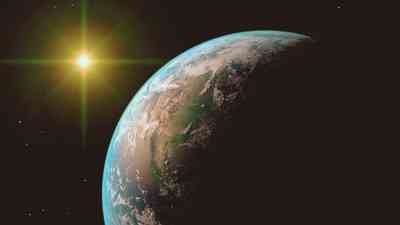
Understanding the earth is crucial in the design of a solar power system because the earth's geography, climate, and environment directly affect the amount and availability of solar energy.
💡 Why to understand?
Understanding Earth geometry is important for solar PV systems because the amount of solar energy that can be harvested(collected) by a PV system depends on the position of the sun relative to the PV panels. The angle and direction of the sun's ray changes throughout the day and throughout the year as the Earth rotates and revolves around the sun, and this affects the amount of energy that can be captured by the PV panels.
It is important to understand some specific factors related to Earth geometry that are crucial to consider before designing and installation of solar PV systems.
Equator
The equator is an imaginary line that dividing the earth into two equal hemispheres. Top half is known as the Northern Hemisphere and bottom half is known as the Southern Hemisphere. It is located at 0 degrees latitude and defines the boundary between the northern and southern hemispheres.
The equator is important because it marks the location, where the sun is directly overhead, providing the most consistent and intense solar radiation. This makes it an ideal location for solar energy production, as the solar panels can be positioned for maximum energy capture.
Latitude
Latitude is a measurement of a location's distance from the equator, expressed in degrees. It ranges from 0 degrees at the equator to 90 degrees at the poles. Latitude is used to determine the angle of the sun's rays and the length of daylight, both of which are important factors in determining the amount of solar energy that can be produced at a location.
Latitude measures 10°N, 20°N to 90°N in the northern hemisphere and 10°S, 20°S to 90°S in the southern hemisphere.
Prime Meridian
Prime Meridian is an imaginary line that divides the earth vertically into two equal halves (half). Prime Meridian is defined as 0 degrees longitude. It runs from the North Pole to the South Pole, passing through the Royal Observatory in Greenwich, England.
The Prime Meridian serves as the reference point for determining longitude, with all other points on the earth being measured in degrees east or west of the Prime Meridian.
Longitude
Longitude is a measurement of a location's distance from the Prime Meridian, an imaginary line that circles the earth and passes through the North and South poles. Longitude is expressed in degrees and ranges from 0 degrees at the Prime Meridian to 180 degrees east or west of the Prime Meridian.
Longitude ranges from 0° to the west of the prime meridian expressed as 10°W, 30°W to 170°W. Longitude range from 0° to the east of the prime meridian expressed as 10°E, 30°E to 170°E.
Longitude is important in determining the time of day at a location. By combining latitude and longitude, we can easily determine the accurate position of any location, as well as the direction of the sun's rays.
Tilt of The Earth
The tilt of the earth refers to the inclination of the earth's axis of rotation relative to its orbit around the sun. The earth's axis is tilted at an angle of approximately 23.5 degrees, which is responsible for the changing seasons and variations in the amount of daylight received at different locations on the earth. The tilt of the earth causes different parts of the earth to receive different amounts of solar radiation throughout the year, which is why the amount of daylight and the intensity of the sun's rays vary with the seasons.
Understanding the tilt of the earth is important in the design of solar power systems, as it helps determine the optimal orientation and tilt angle of the solar panels for maximum energy production.
Movement of the Earth
The movement of the earth refers to the earth's rotation on its axis and its revolution around the sun.
The combination of the earth's rotation and revolution causes the sun's rays to fall at different angles on the earth at different times of the year, which is why the amount of daylight and the intensity of the sun's rays vary with the seasons.
Around its axis
The movement of the earth around its axis refers to the rotation of the earth on its axis, which is an imaginary line that runs through the North Pole and the South Pole. The earth rotates once every 24 hours, which is why we have day and night.
The direction of the movement of the earth around its axis is from West to East. The earth rotates in a counterclockwise (anti-clockwise) direction when viewed from the North Pole, and in a clockwise direction when viewed from the South Pole. This rotation causes the sun, moon, and stars to appear to move across the sky from East to West. So, we say that the sun rises from the east and sets in the west.
The rotation of the earth affects the amount of daylight we receive and the position of the sun in the sky, which are important factors in the design of solar power systems.
Around the sun
The movement of the earth around the sun refers to the revolution of the earth as it orbits the sun. The motion of the earth around the sun in its orbit is called revolution. The earth orbits the sun once every 365.25 days, which is why we have a year. We consider a year as consisting of 365 days only and ignore six hours for the sake of convenience. Six hours saved every year are added to make one day (24 hours) over a span of four years. This surplus day is added to the month of February. Thus every fourth year, February is of 29 days instead of 28 days. Such a year with 366 days is called a leap year.
The earth's orbit around the sun is not a perfect circle but is instead an ellipse. This elliptical orbit causes the earth to be closer to the sun during one part of the year and farther away during another part of the year, which is why we have variations in the length of the day and the intensity of the sun's rays throughout the year.
The movement of the earth around the sun has a significant impact on the earth's climate and weather, as it affects the amount of solar radiation received at different parts of the earth at different times of the year. This, in turn, affects the earth's temperature, which is why we have the changing of the seasons.
Summer Solstice
Summer Solstice is the longest day of the year and occurs when the tilt of the earth's axis is most inclined towards the sun. This happens around June 21st in the Northern Hemisphere and around December 22nd in the Southern Hemisphere.
During the summer solstice, the sun is at its highest point in the sky, and the days are the longest, with the most hours of daylight.
Winter Solstice
Winter Solstice is the shortest day of the year and occurs when the tilt of the earth's axis is furthest from the sun. This happens around December 22nd in the Northern Hemisphere and around June 21st in the Southern Hemisphere.
During the winter solstice, the sun is at its lowest point in the sky, and the days are the shortest, with the least amount of daylight.
Equinox
Equinox refers to the two times of the year when the sun is directly overhead at the equator, resulting in equal amounts of daylight and darkness for all parts of the earth. There are two equinoxes each year, one around March 21st Spring Equinox and one around September 23rd Autumnal Equinox in northern hemisphere.
During the equinox, the tilt of the earth's axis is not inclined towards or away from the sun, resulting in nearly equal illumination for all parts of the earth.
Conclusion
Earth's geometry is crucial for designing and optimizing solar photovoltaic (PV) systems. By considering factors such as latitude, longitude, and the angle of the sun's rays, engineers can determine the most efficient orientation and tilt angle for solar panels. This information is essential for maximizing energy output and reducing costs in solar energy production.
The study of Earth's geometry plays a critical role in predicting the availability and variability of solar radiation, which is the primary source of energy for PV systems.
Related guides
Continue learning with more guides from the Solar Library.

Sun Geometry and Resources
Sun is source of almost all energy on our earth, either directly as a sunlight or indirectly as wind and wave. Sun is the endless source of energy. It is important to understand how solar PV system derive electricity from solar energy i.e., sunlight.
Read guide
Basic Electrical Concepts
Explore essential principles of basic electrical engineering, focusing on voltage, current, power, and electric energy—critical elements for understanding and optimizing solar PV systems. As functionality of solar PV system totally depends on electrical parameters, it is important to know these basic electrical concepts for better understanding solar system and its working.
Read guide
Solar PV Technology
Solar photovoltaic (PV) technology is a rapidly growing field that has the potential to revolutionize the way we generate electricity. Solar PV technology uses the energy of the sun to generate electricity, providing a clean, renewable, and sustainable energy source that can be used in a variety of applications.
Read guide