Solar Charge Controllers
Solar charge controllers are essential components in solar power systems, regulating the energy flow from solar panels to batteries. These controllers prevent overcharging and ensure optimal battery performance, extending the lifespan of solar energy storage systems. With their smart charging capabilities, solar charge controllers enhance the efficiency and reliability of off-grid and grid-tied solar installations.
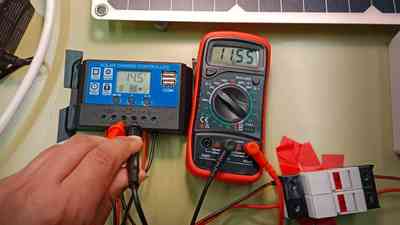
The solar charge controller is similar to our mobile charger. Just like our mobile charger, we use a charge controller to charge the battery bank in a solar off-grid system.
⚙️ Why do we use it?
In an off-grid system, we use batteries to store energy generated from solar panels. It is important to ensure that batteries are properly charged. We use a charge controller to protect batteries from overcharging and over-discharging. Otherwise, batteries can get damaged.
A charge controller, also known as a charge regulator, is a device used in a solar energy system to regulate the flow of electricity from the solar panel to the battery. It acts as an intermediary between the solar panel and the battery, and its main function is to prevent overcharging and over-discharging of the battery.
The charge controller monitors the voltage and current coming from the solar panel and regulates the flow of electricity to the battery. When the battery is fully charged, the charge controller stops or reduces the flow of electricity to the battery to prevent overcharging. When the battery's voltage drops too low, the charge controller increases the flow of electricity to the battery to prevent over-discharging. In addition to preventing overcharging and over-discharging, charge controllers also protect the battery from damage caused by electrical surges and high temperatures.
There are two main types of charge controllers commonly used in solar energy systems:
- PWM (Pulse Width Modulation)
- MPPT (Maximum Power Point Tracking)
PWM Charge Controller
PWM (Pulse Width Modulation) technology is older and cheap.
It uses a technique called pulse width modulation to control the charging of the battery, by adjusting the width of the electrical pulses sent to the battery.
⚙️ How does it work?
In PWM, we need to match voltage from solar panel or array to battery bank voltage. When both side voltage values match, battery starts charging.
PWM charge controllers are less expensive compared to MPPT charge controllers and are suitable for small solar systems. They are also simple to use, easy to install.
Advantage :
- PWM is older and proven technology for longer time.
- PWM is inexpensive.
Disadvantage :
- Less efficient compare to new technology.
- We need to match both side voltage values, but mismatch causes power loss.
MPPT Charge Controller
MPPT (Maximum Power Point Tracking) is advance technology and has many advantages over PWM technology.
It uses a technique called maximum power point tracking (MPPT) to optimize the flow of electricity from the solar panel to the battery. It works by tracking the point at which the solar panel generates the maximum power and adjust the voltage to match that of the battery. This allows the controller to extract the maximum amount of power from the solar panel and transfer it to the battery.
⚙️ How does it work?
MPPT tracks maximum power point and adjust voltage to charge a battery bank. When solar panel or array voltage is below battery nominal voltage, MPPT increases voltage by reducing current. When solar panel or array voltage is above battery nominal voltage, MPPT decreases voltage by increasing current.
An MPPT charge controller has several advantages compared to a PWM charge controller:
- Increased Efficiency:
MPPT charge controllers can increase the efficiency of the solar system by up to 30% compared to PWM controllers, as they can extract more power from the solar panel and transfer it to the battery.
- Wide Range of Input Voltage:
MPPT controllers can accept a wide range of input voltage from the solar panel, which makes them suitable for use with different types of solar panels.
- Better Performance in Low Light Conditions:
MPPT controllers can extract more power from the solar panel in low light conditions than PWM controllers, which makes them suitable for use in cloudy or shaded conditions.
MPPT charge controllers are more expensive than PWM charge controllers and are suitable for larger solar systems.
Advantage :
- MPPT is latest technology.
- More efficient than PWM.
- Generate up to 30% more energy than PWM.
Disadvantage :
- It is expensive than PWM.
Conclusion
When considering a charge controller for a solar energy system, it's important to choose a controller that is compatible with the specific type of battery and solar panel being used, and also take into account the specific needs of the installation and the location. An expert in solar energy can help you choose the best option for your specific needs.
Related guides
Continue learning with more guides from the Solar Library.

Solar PV System
A solar PV system is designed to harness sunlight and convert it into electricity. Comprising solar panels, inverters, and supporting components, these systems offer a sustainable and renewable energy source for homes, businesses, and various applications. By tapping into the power of the sun, solar PV systems contribute to cleaner energy practices, reducing reliance on conventional power sources and promoting environmental conservation.
Read guide
Different Applications of Solar PV System
Solar PV systems, using sunlight to generate electricity, have widespread applications. From powering homes and businesses, lighting roads with street lights, solar panels offer a versatile and eco-friendly solution, making clean energy accessible across various daily activities.
Read guide
Types of Roof Top Solar PV System
A rooftop PV system involves installing solar panels on building rooftops to generate electricity. By utilizing available roof space, these systems efficiently convert sunlight into power for on-site consumption or feeding back into the grid. Rooftop PV systems empower homes and businesses to harness sustainable energy, reducing electricity bills.
Read guide