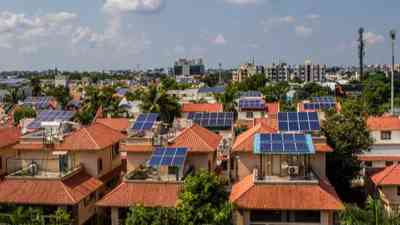
Electricity bills are increasing every year, and many Indian families are looking for ways to reduce their monthly expenses.
To encourage the adoption of clean energy, the Government of India launched the PM Surya Ghar Muft Yojana, one of the largest rooftop solar initiatives in the country.
The scheme helps homeowners install rooftop solar systems by providing financial assistance in the form of subsidies.
In this guide, we will explain everything about PM Surya Ghar Muft Yojana in simple language.
What is PM Surya Ghar Muft Yojana?
PM Surya Ghar Muft Yojana is a Government of India initiative designed to promote rooftop solar installations for residential households.
The objective of the scheme is to:
- Reduce electricity bills for households.
- Increase the use of renewable energy.
- Reduce dependence on conventional power sources.
- Help India achieve its clean energy goals.
Under this scheme, eligible homeowners can receive government subsidies for installing rooftop solar systems.
Why Was This Scheme Introduced?
India receives abundant sunlight throughout the year, making solar energy one of the most practical and affordable renewable energy sources.
The government introduced this scheme to:
- Promote solar energy adoption.
- Reduce electricity expenses for families.
- Support environmental sustainability.
- Create employment opportunities in the solar sector.
Benefits of PM Surya Ghar Muft Yojana
Lower Electricity Bills
A rooftop solar system can significantly reduce your monthly electricity bill.
Many homeowners can reduce their bills by 50% to 90% depending on their electricity consumption.
Government Subsidy
The government provides financial assistance that reduces the upfront cost of installing a solar system.
Long-Term Savings
Solar panels typically last for 25 years or more, helping homeowners save money for decades.
Clean Energy
Solar energy is renewable, pollution-free, and environmentally friendly.
Increased Property Value
Homes equipped with rooftop solar systems may have higher market value.
Who is Eligible for PM Surya Ghar Muft Yojana?
Generally, residential consumers can apply for the scheme if they:
- Are Indian citizens.
- Own a residential property.
- Have a valid electricity connection.
- Have sufficient rooftop space for solar installation.
- Meet the applicable scheme requirements.
The scheme is primarily intended for residential consumers.
What Documents Are Required?
You may need the following documents during the application process:
- Aadhaar Card
- PAN Card
- Recent Electricity Bill
- Mobile Number
- Email Address
- Bank Account Details
- Passport Size Photograph (if required)
Requirements may vary depending on DISCOM guidelines and state regulations.
How Much Subsidy Can You Get?
Subsidy amounts are determined by government guidelines and may change from time to time.
The subsidy generally depends on:
- Solar system size
- Scheme guidelines
- Applicable government policies
Since subsidy structures may be revised periodically, homeowners should always verify the latest details through official government channels before applying.
How to Apply for PM Surya Ghar Muft Yojana?
Step 1: Register on the Official Portal
Create an account using your mobile number and electricity consumer details.
Step 2: Select Your State and DISCOM
Choose your state and electricity distribution company.
Step 3: Submit Application
Provide the required information and upload necessary documents.
Step 4: Approval Process
Your application will be reviewed according to applicable guidelines.
Step 5: Install Rooftop Solar System
After approval, proceed with the installation process through eligible vendors.
Step 6: Inspection and Net Metering
The installed system may undergo inspection and net metering approval procedures.
Step 7: Receive Subsidy
Once the process is completed and approved, the subsidy is credited as per applicable guidelines.
What is Net Metering?
Net metering allows homeowners to export excess electricity generated by their solar system to the electricity grid.
For example:
- Your solar system generates 500 units.
- Your home consumes 350 units.
- The remaining 150 units are exported to the grid.
These exported units help reduce future electricity bills.
Net metering is one of the most important benefits of rooftop solar.
How Much Can You Save?
The exact savings depend on:
- Monthly electricity bill
- Solar system size
- Electricity tariff
- Solar generation
- Net metering benefits
Many homeowners recover their solar investment within a few years and continue saving for the next 20+ years.
Is PM Surya Ghar Muft Yojana Available in Maharashtra?
Yes.
Residential consumers in Maharashtra can benefit from rooftop solar installations under applicable government policies and DISCOM regulations.
Cities such as:
- Mumbai
- Thane
- Pune
- Navi Mumbai
- Nagpur
- Nashik
- Aurangabad
- Kolhapur
have significant rooftop solar potential due to favorable sunlight conditions.
Common Myths About Rooftop Solar
Myth 1: Solar Works Only in Summer
Solar panels generate electricity throughout the year, including during winter and monsoon seasons.
Myth 2: Solar Systems Require High Maintenance
Modern solar systems require minimal maintenance and periodic cleaning.
Myth 3: Solar is Too Expensive
Government subsidies and declining solar equipment costs have made rooftop solar more affordable than ever.
Frequently Asked Questions
Is PM Surya Ghar Muft Yojana completely free?
The scheme provides financial assistance through subsidies. Homeowners are generally required to invest in the remaining project cost.
Can apartment owners apply?
Eligibility depends on the available rooftop space, ownership structure, and applicable guidelines.
How long do solar panels last?
Most solar panels are designed to operate efficiently for 25 years or more.
Can I run an air conditioner on solar?
Yes. A properly sized rooftop solar system can support air conditioners and other household appliances.
How much roof space is required?
The required roof area depends on the size of the solar system being installed.
Conclusion
PM Surya Ghar Muft Yojana is helping Indian households adopt clean and affordable solar energy.
By combining government subsidies, net metering benefits, and long-term electricity bill savings, rooftop solar has become one of the smartest investments for homeowners.
If you own a house and receive regular electricity bills, exploring rooftop solar under PM Surya Ghar Muft Yojana can help you save money while contributing to a greener future.
Related guides
Continue learning with more guides from the Solar Library.

How Much Can You Really Save with Rooftop Solar in 2026?
Discover how much money Indian homeowners can save with rooftop solar in 2026. Learn about solar panel costs, subsidies, net metering, payback period, and long-term savings with easy-to-understand examples.
Read guide
How Commercial & Industrial Businesses Can Save Lakhs with Solar in 2026
Discover how commercial buildings, factories, warehouses, hotels, hospitals, and industrial units can reduce electricity costs with solar power. Learn about solar savings, ROI, payback period, and benefits for businesses in India.
Read guide
Net Metering in Maharashtra: Complete Guide 2026
Learn how net metering works in Maharashtra for rooftop solar systems. Understand billing, eligibility, benefits, application process, and how homeowners can reduce electricity bills.
Read guide